
GST : 27AAFFV7667M1ZA

call images

Call us

08045801431

Why Choose C Mount Industrial Lenses?

Why Choose C Mount Industrial Lenses?

C Mount Industrial Lenses remain a practical choice for demanding machine vision and inspection systems. Their standardized 1-inch mounting thread supports broad compatibility across cameras, adapters, and imaging platforms. Engineers often select them when reliable integration matters more than decorative design. A properly matched lens can capture sharp edges, printed codes, surface defects, and assembly gaps.

On a factory line, small details matter. A 16 mm lens may cover a wider inspection area, while a 25 mm model can provide a narrower view. Working distance, sensor size, lighting, and resolution must be evaluated together. Ignoring one factor can produce vignetting, soft corners, or unwanted reflections. That happens.

In practical testing, C Mount Industrial Lenses offer useful flexibility. Operators can adjust focus and aperture for changing parts, speeds, and light levels. Metal housings also suit environments where vibration and repeated handling are common. However, not every C-mount lens fits every application perfectly. Some models show distortion, limited low-light performance, or reduced sharpness near the image edges. This is easy to overlook.

Reliable selection requires measurable evidence. Review the lens’s image circle, focal length, aperture range, distortion data, and compatibility with the camera sensor. Test sample parts under real lighting, not only in a catalog image. Experienced integrators also check thread depth and clearance before installation. These steps reduce surprises during commissioning. The best choice is not always the most expensive lens. It is the lens that delivers repeatable images, stable operation, and acceptable detail across the entire inspection cycle.
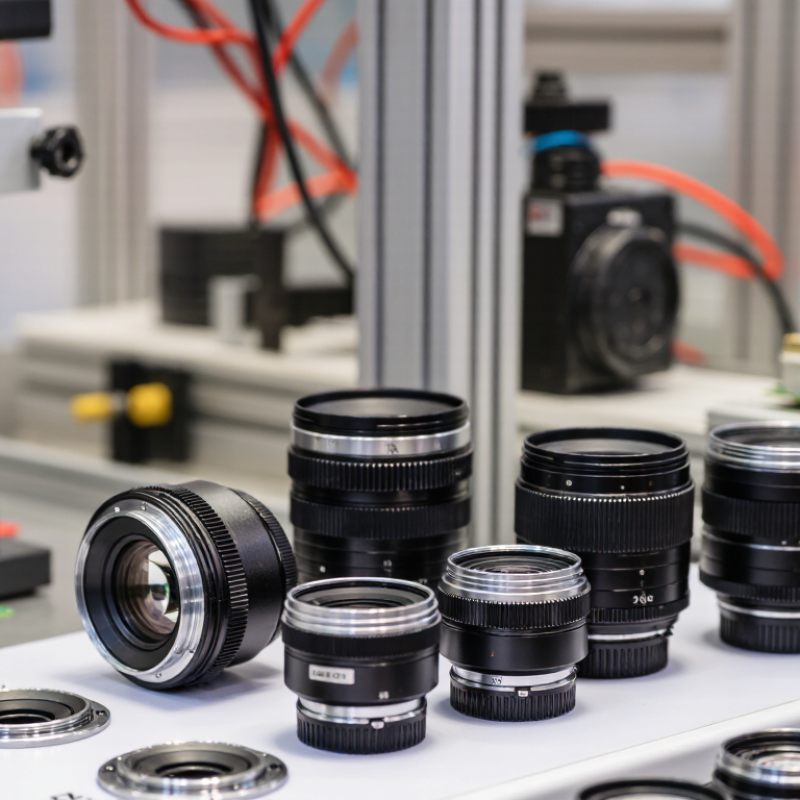
Why Choose C Mount Industrial Lenses?

What Are C Mount Industrial Lenses?

C-mount industrial lenses are optical components designed for machine vision, inspection, measurement, and scientific imaging. They use a standardized 1-inch, 32-thread-per-inch mounting interface, making them compatible with many industrial cameras. The lens forms an image on the camera sensor, while its focal length controls the viewing angle and working distance. A short focal length captures a wider area. A longer focal length shows smaller details from farther away.

In practical inspection setups, lens selection affects measurement accuracy. Sensor size, pixel density, lighting, and object distance must work together. A lens may appear sharp at the center but lose detail near the edges. That problem is easy to miss. Aperture settings also influence brightness and depth of field. A locked focus ring can prevent vibration from changing the image during continuous production. Fixed focal lengths often provide stable results, while variable lenses offer more framing flexibility.

Tips: Measure the working distance before choosing a lens. Check whether the image circle covers the full sensor. Test for distortion using a grid or calibrated target. I have found that a technically suitable lens can still perform poorly under uneven lighting. Recheck focus after temperature changes, especially in long-running systems. Allow space for filters, protective covers, or extension rings. Small mounting errors can shift the field of view. A short test before installation is worth the effort.

How Do C Mount Lenses Work in Industrial Imaging?

C Mount industrial lenses work through a standardized threaded connection between the lens and the camera. The mount usually uses a 1-inch diameter thread with 32 threads per inch. Its flange focal distance is about 17.526 millimeters. This fixed distance helps the lens form a sharp image on the sensor. A locking ring secures the lens during vibration or repeated machine movement.

In industrial imaging, light passes through the aperture and reaches the camera sensor. Focus adjustment changes the lens position slightly, controlling image sharpness at a selected working distance. Aperture settings affect brightness, depth of field, and motion visibility. A smaller aperture can keep more parts sharp, but it may require stronger lighting. A larger aperture collects more light, though focus becomes less forgiving. The relationship is practical, not magical.

During setup, measure the working distance, sensor size, and inspection area carefully. A lens designed for a small sensor may create dark corners on a larger one. I have seen otherwise suitable systems fail because the field of view was estimated by eye. That assumption is convenient, but not always correct. Thread compatibility also deserves attention, especially when adapters or extension rings are added. Small spacing changes can affect focus and image scale. Dust on the rear element can reduce contrast noticeably. It happens. Regular inspection, controlled lighting, and test images provide more reliable results than specifications alone.

What Benefits Make C Mount Lenses Suitable for Industry?

Why Choose C Mount Industrial Lenses?

What Benefits Make C Mount Lenses Suitable for Industry?

C mount industrial lenses offer practical flexibility in machine vision systems. Their standardized thread connects with many cameras, adapters, and inspection assemblies. This makes replacement easier when production requirements change. A technician can often adjust the setup without rebuilding the entire imaging station. That saves time.

These lenses support close inspection of labels, circuit boards, metal edges, and molded parts. Different focal lengths help operators capture wide areas or small details. A 25 mm lens may show a larger component clearly, while a longer lens can inspect distant targets. Manual aperture control also helps manage bright reflections from polished surfaces. Stable images matter.

In factory environments, reliability depends on more than lens size. The lens must match the sensor format, working distance, and required resolution. Otherwise, the image may show dark corners or blurred edges. I have seen simple lens choices create unnecessary adjustment work. That mistake is easy to avoid, but specifications deserve careful checking. Some C mount lenses also allow focus and aperture locking, reducing movement from vibration. They are not perfect for every application. Very high-resolution inspections may need specialized optics, especially when distortion or lighting changes become critical. Testing the lens under real production lighting remains the safest decision.

Which Specifications Matter When Choosing a C Mount Lens?

Choosing a C mount industrial lens starts with measurable specifications, not the thread alone. The C mount uses a 1-inch, 32-thread interface. Compatibility is only the entry point.

Match the lens image circle to the sensor format. A small image circle creates dark corners. Check focal length against field of view and working distance. The basic relation is simple: focal length approximately equals sensor width multiplied by working distance, divided by field width.

Pixel size also matters. For a 3.45 μm pixel, the theoretical Nyquist limit is about 145 line pairs per millimeter. A lens with weak MTF near that frequency may waste sensor resolution.

EMVA 1288 evaluates quantum efficiency, signal-to-noise ratio, and dynamic range. These measurements help compare lenses under controlled imaging conditions.

Aperture affects exposure, depth of field, and edge sharpness. Wide apertures collect more light, but they can increase aberrations. Distortion deserves attention in measurement systems.

ISO 12233 provides methods for evaluating spatial resolution and chart-based image quality. Check distortion percentage, relative illumination, and chromatic aberration across the full sensor.

Infrared applications require wavelength-specific transmission data. Visible-light performance does not guarantee near-infrared performance. This is often missed.

In practice, published specifications may look excellent, yet testing at the actual working distance can reveal focus drift, reflections, or uneven corners. That gap deserves honest review.

How Are C Mount Industrial Lenses Used in Different Applications?

Why Choose C Mount Industrial Lenses?

How Are C Mount Industrial Lenses Used in Different Applications?

C mount industrial lenses connect cameras with a standardized 1-inch thread. They are common in factory inspection, robotics, microscopy, traffic monitoring, and agricultural imaging. A 16 mm lens can capture a wider conveyor area, while a 25 mm lens provides a tighter view of small components. The correct choice depends on sensor size, working distance, lighting, and required detail.

Small details matter.

The International Federation of Robotics reported 541,302 industrial robot installations worldwide in 2023. This growth increases demand for dependable vision systems around assembly lines, welding cells, and automated warehouses. C mount lenses help robots locate edges, read codes, and check surface defects without physical contact. In agriculture, cameras mounted above sorting belts can identify size, color, and visible damage. In microscopy, lower-distortion lenses support repeatable measurements.

A lens is not magic. Poor lighting, vibration, or an incorrect focal length can ruin accurate inspection. The Association for Advancing Automation recorded 31,159 robot orders in North America during 2023, showing how widely automated equipment is being evaluated and refined. In practice, operators should test the lens at the real working distance, not only rely on catalog charts. Some specifications look excellent on paper. They may disappoint on a moving production line. Regular cleaning, secure mounting, and calibration also protect image reliability over time.

Back to top
