Top China Hydraulic Gear Pump Manufacturers Guide
Choosing a Hydraulic Gear Pump is not a simple price comparison. It involves pressure, flow, viscosity, speed, noise, contamination, and service access. A pump that performs well on a test bench may struggle in a dusty excavator or a cold manufacturing plant.
Market research shows continued demand. Grand View Research reports that the global hydraulic pumps market is expanding as construction, agriculture, material handling, and industrial automation invest in hydraulic equipment. Mordor Intelligence also identifies external gear pumps as an important product category, valued for their compact design, moderate cost, and reliable operation. However, published estimates differ because research firms use different definitions, regions, and forecasting methods. That limitation deserves attention.
Hydraulic specialists often emphasize application matching. As John S. Cundiff, author of Fluid Power Circuits and Controls, explains, “The successful application of fluid power depends on selecting components that match the system requirements.” This principle guides the manufacturers discussed in this guide.
Real-world details matter. A pump’s displacement may look suitable on paper, yet excessive inlet restriction can cause cavitation. Poor filtration can score the gear teeth. Incorrect oil viscosity can increase leakage, heat, and energy consumption. Small choices become expensive failures.
This Top China Hydraulic Gear Pump Manufacturers Guide examines manufacturing capability, material quality, testing practices, customization, certifications, delivery reliability, and after-sales support. It also considers a weakness in many supplier comparisons: published specifications rarely reveal long-term field performance. Buyers should verify test data, inspect production controls, and request application references before making a decision.
Hydraulic Gear Pump Fundamentals: Displacement, Pressure, and Efficiency Ranges
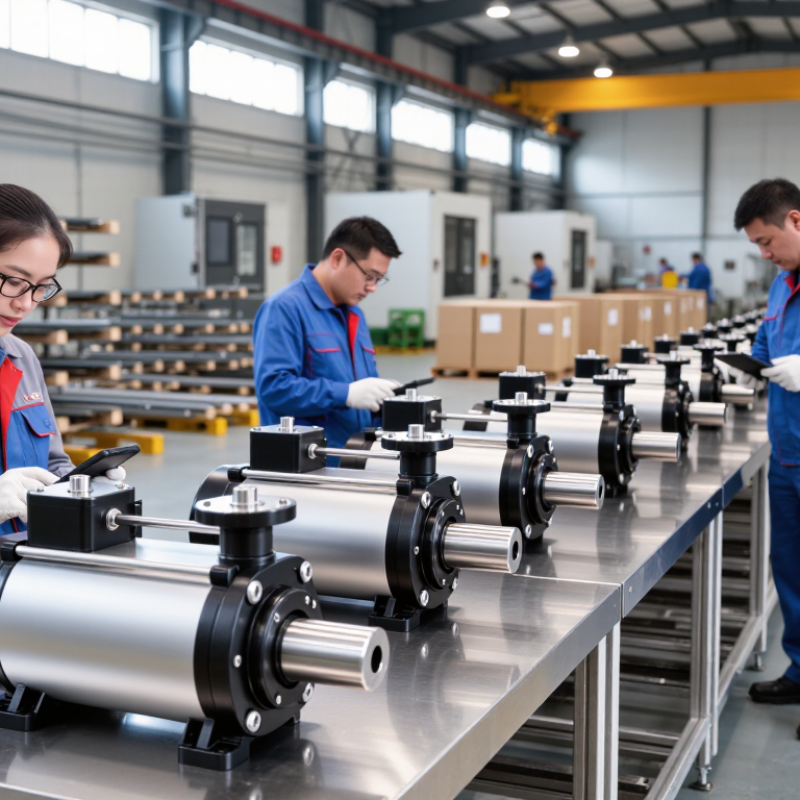
Hydraulic gear pump selection starts with displacement, measured in cubic centimeters per revolution (cc/rev). A 25 cc/rev pump turning at 1,500 rpm produces 37.5 liters per minute theoretically. With 90% volumetric efficiency, actual flow is about 33.75 liters per minute. Real systems are rarely ideal. Internal leakage increases as oil thins or pressure rises.
Pressure ratings need careful reading. A pump may list continuous pressure, intermittent pressure, and peak pressure separately. Many industrial gear pumps operate around 160–250 bar, while specialized designs can exceed 300 bar. These figures depend on speed, oil temperature, shaft loading, and duty cycle. Mechanical efficiency often ranges from 80% to 95%. Overall efficiency is lower because leakage and friction work together. A pump that looks efficient on paper may still generate noticeable heat.
Tips: Match displacement to the required flow, not merely the motor size. Check continuous pressure before peak pressure. Measure oil temperature after real operation. Ask manufacturers for test conditions, since efficiency values without speed and viscosity can mislead. Port size also matters; undersized suction lines may create noise and cavitation. I have seen a correctly sized pump perform poorly because the reservoir was too small. That detail is easy to miss. Compare pressure, displacement, efficiency, materials, and service support across qualified manufacturers.
China’s Manufacturing Landscape: OEM Capacity, Materials, and ISO 9001 Practices
China’s hydraulic gear pump sector benefits from a dense OEM manufacturing base. The China Statistical Yearbook 2024 recorded approximately RMB 33.5 trillion in manufacturing value added during 2023. This scale supports local casting, CNC machining, heat treatment, and assembly suppliers.
Capacity still needs verification.
A capable OEM factory should show machining tolerances, pressure-test records, and traceable material certificates. Common pump materials include gray iron, ductile iron, aluminum alloys, and hardened alloy steel. Material choice affects wear resistance, noise, weight, and fluid compatibility.
In practice, buyers should inspect gear tooth finishing, shaft runout, sealing surfaces, and cleanliness after assembly. The ISO 9001:2015 standard emphasizes controlled processes, calibration, corrective action, and documented traceability.
The ISO Survey 2022 reported 1,265,216 valid ISO 9001 certificates worldwide, showing broad adoption but not automatic product quality.
A certificate is only evidence of a management system. It does not prove every pump performs reliably.
Request recent audit findings, inspection plans, and sample test curves. Some suppliers provide impressive documents but weak field feedback. That gap deserves attention.
OEM evaluation should also compare minimum order quantities, tooling ownership, engineering change control, and spare-part support. These details often reveal whether a factory can support stable production or only complete one urgent batch.
How to Compare Pump Ratings: 160–250 Bar Pressure and 80–95% Efficiency
Top China Hydraulic Gear Pump Manufacturers Guide
Pressure ratings between 160 and 250 bar require careful comparison. A 250 bar figure may represent peak pressure, not continuous operation. Ask for continuous, intermittent, and maximum pressure values. Check the test speed, oil viscosity, and fluid temperature behind each rating. Numbers need context.
Efficiency claims from 80% to 95% also need closer inspection. Ask whether the figure means volumetric, mechanical, or total efficiency. A pump showing 95% volumetric efficiency may still lose energy through friction. Compare performance at your actual working pressure and speed. Record inlet vacuum, outlet pressure, oil temperature, and flow during testing. Small leakage often appears after the oil becomes hot.
Field checks can reveal what a catalogue misses. Listen for a sharp whine near the upper pressure limit. Inspect fittings for heat marks after several hours. A pressure gauge and flow meter provide useful evidence. I once trusted a high efficiency figure too quickly, then noticed it applied only to a narrow test range. That mistake was avoidable. A rushed comparison can mislead me.
For reliable selection, request test curves rather than one attractive percentage. Review pressure stability, shaft speed limits, noise data, and service intervals. Confirm whether seals and housings tolerate the intended fluid. A pump rated at 200 bar may suit a system better than a 250 bar unit if it maintains efficiency continuously. Real operating conditions matter more than the highest printed number.
Top China Hydraulic Gear Pump Manufacturers Guide - How to Compare Pump Ratings: 160–250 Bar Pressure and 80–95% Efficiency
The figures below represent practical industry rating bands for external hydraulic gear pumps. Actual performance depends on fluid viscosity, operating temperature, rotational speed, inlet conditions, clearances, and test method.
| Comparison Category |
Typical Displacement Range |
Continuous Pressure Rating |
Intermittent Pressure Rating |
Typical Speed Range |
Volumetric Efficiency |
Overall Efficiency |
Common Application Profile |
Key Evaluation Point |
| Compact Low-to-Medium Pressure Gear Pump |
0.5–2 cm³/rev |
160 bar |
180 bar |
800–3,000 rpm |
80–86% |
68–76% |
Small agricultural equipment, auxiliary circuits, compact power units, and light material-handling systems. |
Confirm that the pump can maintain rated flow at the required operating speed without excessive inlet vacuum. |
| General-Purpose Medium-Pressure Gear Pump |
2–10 cm³/rev |
160–200 bar |
200–230 bar |
600–2,500 rpm |
82–90% |
72–82% |
Mobile hydraulics, lifting equipment, small presses, industrial power packs, and hydraulic auxiliaries. |
Compare rated pressure at the intended speed, because pressure capability and flow capacity are interdependent. |
| High-Pressure Standard Gear Pump |
10–40 cm³/rev |
200–250 bar |
230–280 bar |
500–2,200 rpm |
85–93% |
76–86% |
Construction machinery, agricultural machinery, injection auxiliaries, and industrial hydraulic systems. |
Check whether the stated pressure is continuous, intermittent, or peak; these ratings are not interchangeable. |
| Large-Displacement High-Flow Gear Pump |
40–100 cm³/rev |
160–200 bar |
200–230 bar |
400–1,800 rpm |
83–90% |
72–82% |
Large mobile machines, hydraulic power units, conveyors, and high-flow auxiliary circuits. |
Give additional attention to shaft loading, housing strength, oil heating, and suction-line sizing. |
| High-Efficiency Precision Configuration |
5–35 cm³/rev |
200–250 bar |
250–280 bar |
800–2,500 rpm |
90–95% |
82–90% |
Energy-sensitive industrial systems, proportional hydraulic circuits, and applications requiring reduced heat generation. |
Request test conditions, oil viscosity, temperature, speed, and measured flow before comparing efficiency claims. |
| Reversible or Bi-Directional Gear Pump Configuration |
1–25 cm³/rev |
160–200 bar |
200–230 bar |
500–2,000 rpm |
80–88% |
70–80% |
Winches, rotating actuators, compact drive systems, and circuits requiring flow reversal. |
Verify drain arrangements, bearing design, seal suitability, and equal performance in both directions. |
How to compare the ratings:
Continuous pressure is the pressure a pump is generally designed to sustain during normal operation. Intermittent pressure is normally permitted only for limited periods. Volumetric efficiency compares actual delivered flow with theoretical displacement flow, while overall efficiency also includes mechanical losses. A higher pressure rating does not automatically indicate better performance unless the pump also provides suitable efficiency, service life, speed range, noise control, and inlet conditions for the intended application.
Selection Criteria: Flow Rate, Speed, Sealing, Testing, and After-Sales Support
Selecting among China hydraulic gear pump manufacturers requires more than comparing catalog prices. Begin with flow rate and operating speed. Match the pump’s displacement to the machine’s measured demand, not its maximum advertised output. A pump rated for 80 L/min may deliver less under heat, pressure, and line resistance. Record the working pressure, fluid temperature, shaft speed, and duty cycle before requesting quotations. Measure twice.
Sealing deserves close inspection. Ask whether the seal material suits the hydraulic fluid, temperature range, and outdoor exposure. Small leaks often appear after repeated cold starts, not during factory demonstrations. Confirm shaft tolerances, housing materials, port dimensions, and noise limits. Testing should include pressure holding, flow verification, vibration checks, and endurance running. Request actual test records with serial numbers and calibrated instrument details. Photos help, but they are not proof.
Reliable manufacturers explain their process clearly and admit practical limits. This matters more than polished sales language. Check production experience, machining controls, inspection procedures, and traceability. After-sales support should cover installation guidance, spare seal kits, troubleshooting steps, and response times. Clarify warranty terms before payment, including what evidence is required for a claim. A supplier may promise fast assistance, yet unclear communication can delay a shutdown repair. Ask for a technical contact who understands your circuit, not only a sales representative. Some buyers ignore service until failure. That mistake is expensive.






 Send Inquiry


