GST : 27AAFFV7667M1ZA

call images

Call us

08045801431

What Types of Pressure Hoses Are There?

Pressure hoses carry liquids or gases through systems where ordinary tubing may fail. Their construction varies with pressure, temperature, fluid compatibility, and movement. A compact hydraulic line beside an excavator boom faces different demands from a steam hose in a processing plant. Both require careful selection. Neither should be chosen by pressure rating alone.

The categories commonly include hydraulic, pneumatic, water, steam, chemical, fuel, and pressure-washer hoses. Some are reinforced with textile, steel wire, or multiple layers. Others use specialized inner tubes to resist heat, oils, or corrosive fluids. Grand View Research estimated the global industrial hose market at USD 13.2 billion in 2023, with projected growth through 2030. That broad market figure includes many hose applications; it is not a pressure-hose sales estimate. The distinction matters.

Standards help make comparisons more meaningful. ISO 18752 specifies performance requirements for hydraulic hose assemblies, while SAE J517 covers hydraulic hose types and dimensions. They do not replace the equipment maker’s instructions or a review of actual operating conditions. Check working pressure, temperature range, bend radius, and fluid compatibility. Also inspect fittings and assembly ratings. A hose can look robust and still be the wrong choice. Details matter.

This guide explains the main Pressure Hoses types, their typical uses, and the trade-offs behind each. Some categories overlap, and product labels are not always consistent. That is worth keeping in mind. A sound selection starts with the system, not the shelf label.
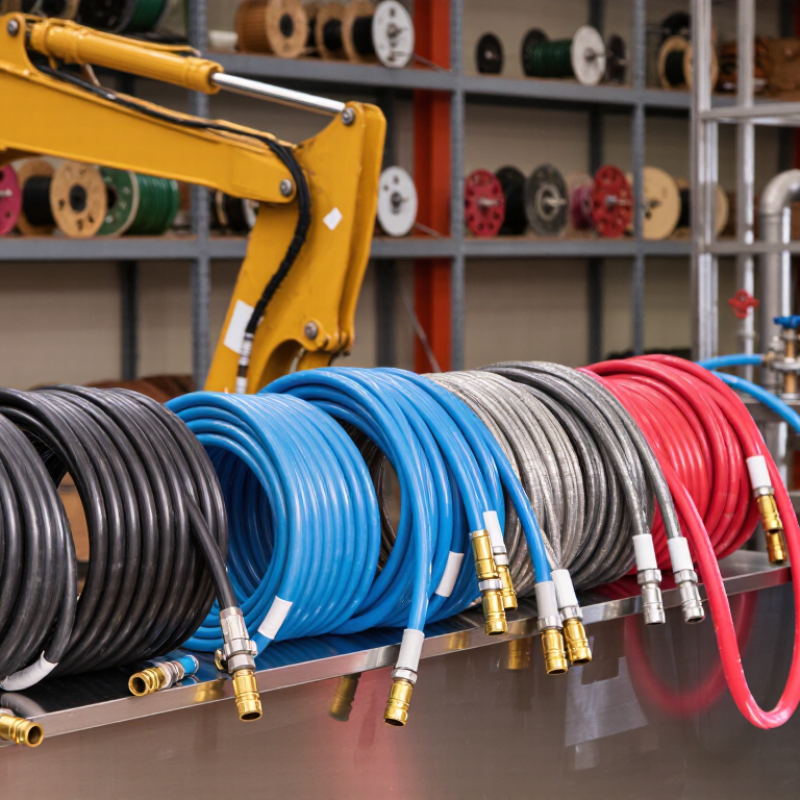
What Types of Pressure Hoses Are There?

How Are Pressure Hoses Defined and Classified?

A pressure hose is a flexible assembly designed to carry liquid or gas above ambient pressure. Its construction usually combines an inner tube, reinforcement layers, and an outer cover. The tube contacts the conveyed material; reinforcement helps resist internal force. The cover shields the assembly from abrasion, moisture, heat, or sunlight. Pressure ratings matter, but they do not describe every working condition. Temperature, fluid compatibility, bend radius, and pressure surges can all affect suitability. Ratings matter.

Hoses are commonly classified by service, construction, and operating limits. Hydraulic hoses carry pressurized fluids in machinery, while air hoses convey compressed air. Water, steam, and chemical-service hoses serve different media, each requiring compatible materials and temperature limits. Construction may be braided or spiral-reinforced, with one or more reinforcement layers. A hose’s pressure rating should be checked alongside its temperature range and stated working conditions. I would not treat a category name as a specification. In practice, categories can overlap, and a tidy label may conceal a poor match. Check the assembly, including its fittings, before installation; a suitable hose can still fail if its connections are incompatible or poorly secured.
What Types of Pressure Hoses Are Available?

Pressure hoses are available in several constructions, and the right choice depends on the fluid, operating pressure, temperature, and movement in the system. Hydraulic hoses commonly use textile reinforcement, one or two wire braids, or multiple spiral-wire layers. Textile-braided hoses suit lighter-duty circuits. Wire-braid designs handle higher pressures, while spiral reinforcement is used in demanding, high-impulse applications. SAE J517 identifies these differences through its 100R hose series, including textile, braid, and spiral constructions.

Other options include thermoplastic hoses, which are often light and flexible, and PTFE-lined hoses, which can suit certain chemical or high-temperature services. Air, water, steam, and material-transfer hoses are also available, but their covers and linings must match the intended medium. ISO 18752:2014 organizes hydraulic hose performance by constant working-pressure classes, with ratings reaching 42 MPa, or 420 bar. That figure is not a universal rating: hose size, temperature, and assembly details affect the permitted pressure. Not interchangeable. In practice, check the hose marking and the manufacturer’s technical data sheet, then confirm the fittings and minimum bend radius. A hose that fits neatly on a bench may kink once routed around a machine frame. That detail is easy to miss.

What Types of Pressure Hoses Are There? - What Types of Pressure Hoses Are Available?
Hose Type Typical Construction Representative Working Pressure Common Uses Key Selection Considerations
Hydraulic Hose Oil-resistant inner tube with textile, wire-braid, or spiral-wire reinforcement and a protective outer cover. About 1,000–6,000 psi, depending on hose construction, size, and service conditions. Hydraulic machinery, mobile equipment, industrial power systems, and agricultural machines. Match the hose to the fluid, system pressure, temperature, bend radius, and applicable hydraulic hose standard.
Pneumatic Hose Flexible rubber, PVC, polyurethane, or other polymer tubing, sometimes reinforced with textile braid. Often about 100–300 psi for general-purpose compressed-air service. Air tools, compressors, pneumatic controls, and workshop air lines. Check pressure rating, air or lubricant compatibility, temperature range, flexibility, and fittings.
Pressure Washer Hose Reinforced rubber or thermoplastic hose designed to carry high-pressure water. Commonly about 2,000–5,000 psi; some specialized assemblies are rated higher. Pressure-washing equipment for cleaning vehicles, buildings, machinery, and paved surfaces. Use a hose rated for the washer’s maximum pressure and water temperature, with compatible end connections.
High-Pressure Water Hose Rubber or polymer inner tube with textile or wire reinforcement, depending on the pressure class. Typically about 150–1,000 psi for reinforced water-service hoses; ratings vary widely by design. Water transfer, irrigation systems, washdown, and industrial water lines. Confirm suitability for potable or non-potable water, operating pressure, temperature, and outdoor exposure.
Steam Hose Heat-resistant rubber inner tube with textile reinforcement and a cover intended for steam service. Often about 150–250 psi for industrial steam hose, subject to temperature and hose specification. Steam cleaning, heating processes, and industrial steam distribution. Steam pressure and temperature must both be within the hose rating; follow inspection and replacement guidance.
Chemical Transfer Hose Chemically resistant rubber or fluoropolymer lining, with textile or wire reinforcement as required. Many transfer assemblies are rated around 150–300 psi, but the rating depends on the hose and chemical. Transfer of compatible acids, solvents, process chemicals, and other industrial liquids. Verify chemical compatibility, concentration, temperature, permeation resistance, and required electrical properties.
Thermoplastic Hydraulic Hose Polymer inner and outer layers with synthetic-fiber or wire reinforcement. Approximately 1,000–8,000 psi across common product designs; specialized designs may differ. Compact hydraulic equipment, material-handling systems, and applications requiring a lightweight hose. Check fluid compatibility, pressure pulses, temperature limits, abrasion protection, and minimum bend radius.
Pressure ranges are representative examples, not universal ratings. Always use the hose assembly’s specified working pressure and temperature limits, and confirm compatibility with the conveyed medium and operating conditions.

How Do Pressure Hose Materials and Construction Differ?

Pressure hoses vary by both the material touching the fluid and the reinforcement beneath the outer cover. Rubber hoses are flexible and handle vibration well, making them common in demanding equipment. Thermoplastic hoses are often lighter and can offer a smaller bend radius, though their performance depends on the fluid and temperature. PTFE-lined hoses resist many chemicals and tolerate heat, but they may feel stiffer than rubber. None is universal.

Construction changes everything. A smooth inner tube helps fluid move with less turbulence, while a corrugated tube can bend more easily. One or more layers of braided wire or textile strengthen the hose against pressure. Spiral reinforcement is used in some designs that face demanding pressure cycles. On a workbench, the difference is visible: a wire-braided hose feels firm, while a textile-reinforced one may flex more readily. It is tempting to choose by pressure rating alone. That can miss the point. Check fluid compatibility, operating temperature, bend radius, and fitting style together. Even a robust hose can fail early if it is kinked or paired with unsuitable fittings. Small details matter. The outer cover also affects resistance to abrasion, oil, weather, and heat, but it does not reveal every limit of the inner tube. A product data sheet is worth checking before installation.

Which Industries Use Different Types of Pressure Hoses?

Pressure hoses serve different jobs, and the right construction depends on the fluid, pressure, temperature, and movement involved. In construction and agriculture, reinforced hydraulic hoses carry oil to excavators, loaders, and tractor attachments. Wire-braided hoses often suit moderate pressure and repeated flexing; spiral-reinforced designs can handle tougher, high-pressure service. They are not interchangeable by appearance alone.

Tips: Check the hose’s pressure rating and fluid compatibility. Inspect fittings, bends, and abrasion points, too. A small mismatch matters.

Food processing plants use smooth-bore hoses for transferring liquids and cleaning equipment, where cleanability and material compatibility are essential. Chemical plants need hoses with liners chosen for specific chemicals, since “chemical-resistant” is not a universal guarantee. Factories may use compressed-air hoses for pneumatic tools, while fire services rely on pressure-rated water hoses for pumping and delivery. Vehicle workshops use hydraulic hoses in lifts and machinery. The industry labels help, but actual conditions vary between sites. A tidy chart can oversimplify things; temperature spikes, vibration, and tight routing can change what works safely. Check the equipment maker’s specifications and replace damaged hose assemblies promptly.

What Types of Pressure Hoses Are There—and Which Industries Use Them?

Indicative working-pressure ranges by hose type. Actual ratings depend on hose size, construction, temperature, and application.

Air hoses are common in manufacturing and construction; water and steam hoses serve agriculture, food processing, and laundries; chemical-transfer hoses are used in process industries; hydraulic hoses power mobile equipment and machinery; and high-pressure water-jet hoses support surface preparation and shipbuilding. These broad ranges are illustrative, not product specifications—always check the hose manufacturer's rating for the intended service.

What Factors Determine the Right Pressure Hose?

What Factors Determine the Right Pressure Hose?

Choosing a pressure hose starts with the system’s maximum working pressure, including surges and pulsation—not just the pump’s rated output.

ISO 18752:2014 classifies hydraulic hoses in constant-pressure ranges from 3.5 to 42 MPa, or about 500 to 6,000 psi. These are classification values, not a recommendation for every application. The hose assembly, fittings, and connected equipment must all suit the operating pressure. Pressure spikes can be easy to overlook.

Temperature and fluid compatibility matter just as much. Check the hose manufacturer’s stated limits for the actual fluid and operating temperature; hot oil, for example, can affect the inner tube over time.

SAE J517 provides hose performance and dimensional requirements used across hydraulic applications. Also compare the minimum bend radius with the real routing path. A hose may meet pressure requirements and still kink behind a machine panel. Consider abrasion, vibration, outdoor exposure, and fitting type, too. Measure the installed route carefully; a neat drawing can miss a sharp turn or a moving joint. Then verify the hose assembly’s ratings against the equipment documentation before installation.

Back to top